Introducing MassVision: A Code-Free Platform for Mass Spectrometry Imaging Data Analysis
MassVision is an open-source tool built on the 3D Slicer ecosystem, making complex MSI workflows accessible without coding.
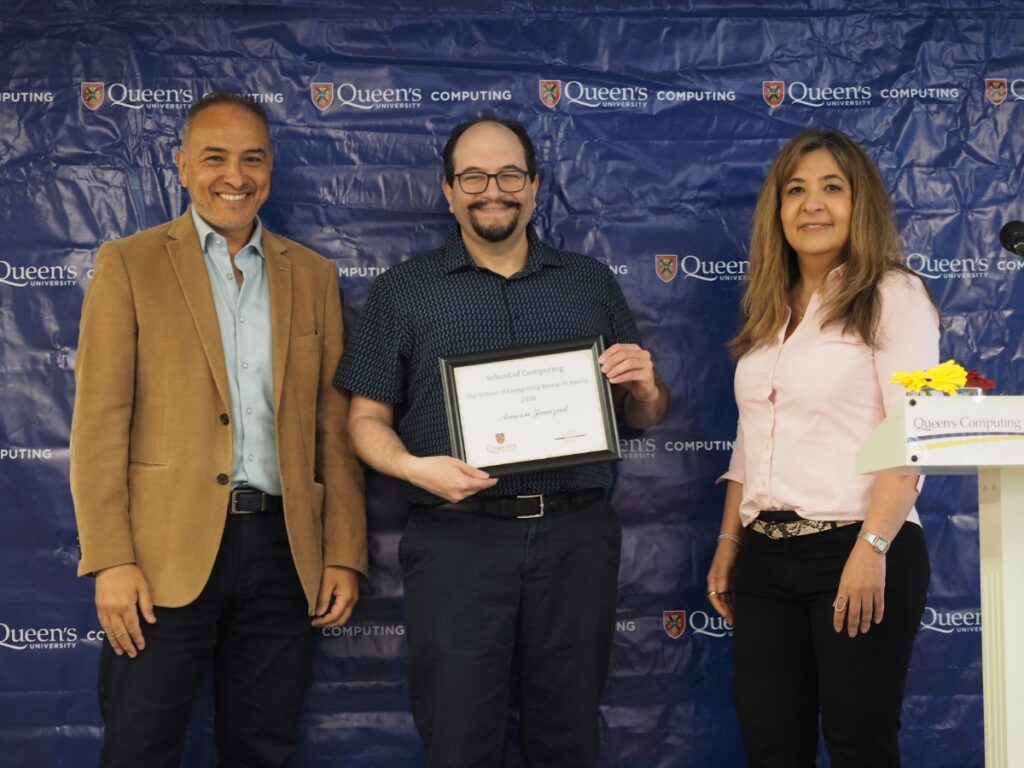
Amoon Jamzad, a postdoctoral fellow at the Medical Informatics (Med-i) Laboratory at Queen’s School of Computing, has launched Mass Vision a new open-source platform designed to simplify and expand access to Mass Spectrometry Imaging (MSI) data analysis.
Built on the 3D Slicer ecosystem, MassVision addresses a long-standing challenge in MSI research. While MSI can reveal rich molecular information within biological samples, existing analysis workflows are often complex and fragmented, requiring advanced programming skills. These barriers can limit both efficiency and accessibility for researchers.
MassVision offers a code-free, integrated environment that allows researchers to focus on biological discovery rather than software development. The platform supports high-dimensional and multi-slide MSI datasets, making it well-suited for both exploratory research and high-throughput studies.
MassVision provides a user-friendly set of tools designed to help researchers explore and understand MSI (Mass Spectrometry Imaging) data more intuitively. The platform allows users to visualize molecular patterns and organize and compare datasets easily. It also incorporates advanced analysis methods, including built-in AI tools, which can be utilized without any programming skills. MassVision has demonstrated its effectiveness in real-world research scenarios, aiding in the discovery of significant biological patterns that are often challenging to detect using traditional methods. Additionally, MassVision is open-source and freely accessible through the 3D Slicer platform.
Data Access: In-house MSI data used for validation is publicly available in Metabolites under identifier MTBLS12868.
Smart Textiles May Soon Be Able to Control Devices or Monitor Health
Imagine adjusting the temperature of the air conditioning or skipping a song in your car, not by fiddling with a screen or voice command, but simply by swiping your hand across the fabric of your seatbelt.
It sounds futuristic, but this is the direction automotive design could be shifting towards — away from screens and buttons, and towards multi-touch textiles that sense your gestures and respond to them.
I am an interaction design professor and director of a research lab that develops smart textile technology. These textiles can transform how people interact with everyday objects and materials, including car interiors, by embedding touch-sensing stitches directly onto fabric elements.
These fabric-based interfaces can sense gestures like swipes, taps and presses, offering a safer and more intuitive alternative to touchscreen systems.
Touch screens and textiles
Advances in technology have led to the proliferation of screens for control and feedback in cars. In luxury cars, these screens are progressively becoming more advanced. Elon Musk’s Tesla, for example, has famously moved most vehicle controls onto a central touchscreen.
While this makes for a sleek interior, it’s not necessarily safer or easier to use.
My colleagues and I conducted a user study that showed how interacting with touchscreens while driving can significantly increase distraction and lane deviations. You have to take your eyes off the road, locate the button (while the car is moving and vibrating) and confirm the change, diverting your attention from what really matters.
As a multidisciplinary team of researchers — from electrical engineering and computing to art and design — who study human-computer interaction, we explored 3D-embroidery technology and computational design of e-textile sensors.
Inspired by traditional crafts, smart materials can be used to incorporate interaction as part of the process itself. In this way, we are able to digitally design multi-touch embroidered sensors (stitched using conductive thread into automotive materials like leather) to support wireless gesture-based control.
Technologies like 3D printing and laser-cutting help manufacture and prototype new products. Similarly, we have developed new fabrication methods in smart textile design, from e-sewing and e-serging to WovenCircuits.
These novel techniques support the integration of electronic threads while machine sewing, serging and overlocking, or weaving with little to no need for post-fabrication assembly of sensors or other parts.
Touch control
Voice input is a popular method for controlling devices and machines, but in vehicles, it’s neither reliable nor safe. Voice recognition technology has come a long way, but is still considered by scholars as an “unfulfilled promise.” For voice input to perform well, the user needs to be a native English speaker, in quiet surroundings and have a clear voice.
While voice input may work well during the software development and testing of those systems, real-world scenarios are different. Think of a user with loud children in the back seat, people with different accents, or what happens when driving through a loud construction zone.
Rather than using voice, screens or other inputs, our lab researched whether a car’s interior could become the interface. We digitally embroidered e-textile sensors onto faux leather seat and steering wheel covers and seatbelt pads.
For proof-of-concept, we designed three prototypes that control media while driving, with touch-sensing stitches that could play or pause audio, skip to the next track and adjust the volume. Our design was wire-free, relying solely on conductive thread, connected via Bluetooth and fully customizable to any vehicle.
Future applications
Our research lab develops touch-responsive interactions with everyday objects as part of a larger push towards designing interactive interior spaces. This is also known as “interioraction” and near-future “decoraction”.
From stained-glass animation that act as information displays to interactive garments that support people with physical disabilities, some of these designs go beyond aesthetics and functionality. They open up new ways to think about usability, accessibility, and the way we design future tech.
E-textiles have applications that range from delivering health care to transforming any kind of object into a smart one. Circuits can be sewn into pre-existing textiles or rugs can be woven to detect accidental falls and send signals. Seat covers can detect pressure to subtly correct posture.
In these ways, smart textile designers are making future technologies less intrusive and more accessible and fun to interact with.![]()
Sara Nabil, Assistant Professor of Human-Centered Computing, Queen’s University, Ontario
This article is republished from The Conversation under a Creative Commons license. Read the original article.
2025 COMPSA Student Awards

This April, Queen’s Computing Students’ Association (COMPSA) launched a new annual Student Awards tradition to celebrate the contributions of outstanding Computing undergraduate students.
COMPSA Vice President Nina Thaksee established the awards with support from the School staff and Computing instructor Dr. Erin Meger. After researching the history of the School of Computing, Nina decided to dedicate the four new awards to honoring the legacy of renowned former or retiring School instructors Robin Dawes, Wendy Powley, Tom Bradshaw, and Selim Akl. Each award is meant to recognize a current Computing undergraduate student for their efforts and contributions not just to the School of Computing, but also the Queen’s and Kingston community as a whole.
The winners in each of the following categories were presented by Nina at the inaugural COMPSA Student Awards ceremony on April 4th. Congratulations to all!
Robin Dawes First Year Excellence in Computing Award
Dr. Robin Dawes served as an Associate Professor at Queen’s University from 1983 to 2022, retiring after an outstanding 39-year career. He earned a Bachelor of Science in Math and Computing and went on to complete his Master’s and PhD in Computer Science at the University of Toronto. During his time at Queen’s University, he taught a variety of computing courses, including foundational courses like CISC 121 and CISC 124. He was highly regarded by first-year students and was known for his passion for teaching. In recognition of his contributions, he received the Howard Staveley Teaching Award three times, as well as the Frank Knox Award for Excellence in Teaching.
Honoring Dr. Robin Dawes, this award celebrates an exceptional first-year student who demonstrates initiative in Computing. The recipient stands out through their achievement and engagement in Computing-related extracurriculars.
Winner: Kelvin Nguyen

Notes from the awards committee:
Kelvin showcases a commendable commitment to diversity and inclusion as an executive intern at COMPSA. He expanded assembly voting to include international students. He also identified a gap between students and staff, so he introduced a ‘Town Hall Q&A’ with the School of Computing Director. He participated in QHacks and represented Computing at the March Open House, where he welcomed incoming and prospective students. His overall sentiment, focusing on improving community over self, stood out to the committee.
The Wendy Powley Outstanding Woman in Computing Award
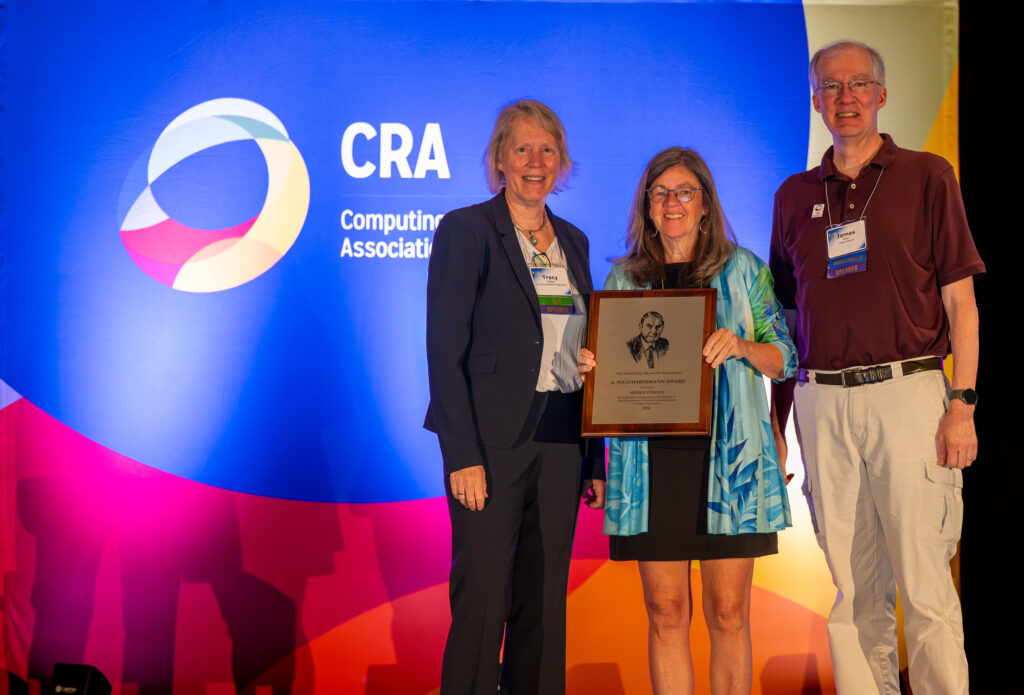
Wendy Powley is currently an Associate Professor at the Queen’s University School of Computing and is set to retire next year after an impressive 33-year career. She obtained a Bachelor of Arts in Psychology in 1984 and a Master of Science in Computer Science in 1990, both from Queen’s University. While teaching at Queen’s Computing, she founded the ACM Canadian Celebration of Women in Computing, an annual conference that continues to connect women in technology across Canada. She also founded Queen’s Women in Computing, a student-run organization with aims of empowering underrepresented groups in technology. In 2022, she received the CS-Can/Info-Can Distinguished Services Award for her contributions to increasing the representation of women in computing.
Named after Professor Wendy Powley, this award recognizes an individual who identifies as a woman in Computing and demonstrates dedication, initiative, and commitment to diversity and inclusion.
Winner: Keelyjoon McSpurren

Notes from the awards committee:
Keelyjoon truly embodies the spirit of this award. She served as the Vice-chair of community and co-chair of Queen’s Women in Computing, where she supported and mentored many female students. Impressively, she was also selected to join the Queen’s board for the National Center for Women & Information Technology, where she shared her experiences to promote systemic and meaningful change.
The Tom Bradshaw Community Service Award
Tom Bradshaw was the Technical Manager of the Queen’s University School of Computing from 1979 to 2021, spending 42 years lending a helping hand to the Computing community. He graduated from Queen’s University with a Bachelor’s Degree of Science in Applied Mathematics in 1978 and also completed a Master’s Degree in Computer Science. He was paramount in guiding the School of Computing systems through the rise of Unix servers, virtual machines, the rise of Linux, Internet of Things, cloud computing and machine learning. Tom Bradshaw passed away on December 29th, 2021, at the age of 66 after battling with cancer.
This award honours Tom Bradshaw and his legacy by recognizing a Computing student who strives to make a difference not only through school, but in the border community as well.
Winner: Beth Armstrong

Notes from the awards committee:
This year, Beth Armstrong had an incredible outreach impact. She held various leadership roles in Queen’s Women in Computing, and is also one of the incoming co-chairs. In the greater Queen’s community, she is currently the co-chair of the Queen’s Music Club, where she strives to host welcoming and inclusive events. Beyond the university, she volunteers in the local area at Soul Food and Grandfriends on a weekly basis.
The Selim Akl Computing Student Leader Award
Dr. Selim Akl is a Professor at Queen’s University in the School of Computing and is set to retire at the end of this term, after an impressive 47-year career at the institution. He completed his Ph.D. in 1978, focusing on the Statistical Analysis of Some Properties of Solutions to the Traveling Salesman Problem at McGill University. As an instructor, he was awarded the Howard Staveley Award for Teaching Excellence in 2004 and 2007. From 2007 to 2017, he served as the Director of the School of Computing and displayed exceptional leadership in his role. He was also a pioneer in research, particularly in the fields of parallel and unconventional computing. Throughout his career, Dr. Akl has received the CS-Can/Info-Can Lifetime Achievement Award in Computer Science, the Queen’s University Distinguished Service Award and was also elected as a Lifetime Inaugural Highly Ranked Scholar by Scholar GPS.
Named after Dr. Selim Akl, this award recognizes a student who has made a significant impact on the Computing community at Queen’s. The recipient should demonstrate strong leadership, and actively work to improve the student life at Queen’s through advocacy and initiatives.
Winner: Owen Rocchi

Notes from the awards committee:
As the previous COMPSA VPSA, Owen enacted many meaningful changes, such as introducing a Computing Club Roundtable. He brought together computing clubs and ensured that their initiatives were supported financially. He currently serves as the 155th President of the Alma Mater Society, being the first computing student to do so. His many initiatives and experiences showcase his outstanding leadership.
Queen’s School of Computing students take the 2025 Mayor’s Innovation Challenge by storm.
The annual Mayor’s Innovation Challenge invites post-secondary students from across Kingston to pitch their ideas to make the city of Kingston a better place.
Teams from Queen’s University, St. Lawrence College and Royal Military College, whose projects were selected for the final Pitch Competition, presented their work on March 14 at Kingston City Hall to a panel of leaders with expertise in municipal government, entrepreneurship and innovation.
Handfluence and Lawtonica, two teams of Queen’s students, won top prizes at this year’s competition!
All four team members of Lawtonica, the team which won the Public Sector Innovation Prize, are 1st year Computing students.

Ethan Stassen, Zain Al Sudani, Yafet Beyene, and Walelign Sumoro designed Lawtonica as an innovative AI tool that can simplify the process of finding and comprehending local bylaws. It uses a specialized AI chat named Tonica, which handles all the time-consuming research by searching through hundreds of pages of legal documents in a matter of moments.
The Handfluence team is comprised of Emil Mathew, 4th year Mechatronics and Robotics Eng., Derek Youngman, 4th year Computing, and Christopher Gill, who is in 3rd year Computing. Handfluence translates ASL to English in real-time, while an animated avatar converts English to ASL with proper grammar and structure. The program has an added haptic option for Deaf-Blind users. This innovative technology can help bridge the gap between Deaf and hearing individuals in banks, hospitals, and city government offices.

Queen’s School of Computing congratulates our students on their success and their contribution to the Kingston community.
You can find more information about the winning teams, the competition, and the prizes, on the City of Kingston website.
Announcing a New Dual Master’s Degree in Partnership with the American University of Sharjah (AUS)

Queen’s School of Computing is proud to partner with the American University of Sharjah (AUS) in the United Arab Emirates for a new dual master’s degree program in computer science and computer engineering.
The program will launch in the fall of 2025. The dual master’s degree program will offer graduate students an opportunity to take courses at both Queen’s University and the AUS, while being co-supervised by faculty members from both universities. Graduating students will earn two distinct master’s degrees from each institution, preparing them to work, innovate, and solve emerging technological challenges on the international stage.
The program is an example of the School’s commitment to international collaboration and global academic excellence.
To learn more about this exciting new transcontinental initiative, read the announcement on the AUS website.
2025 Creative Computing Showcase

April 3rd, 2025
11:30am-2pm
Mitchell Hall
Rose Innovation Event Commons and LinQLab
Once again, the School of Computing is thrilled to welcome the Kingston community to the annual Creative Computing Showcase!
The Creative Computing Showcase is annual large-scale demonstration of different applications of Computing as a discipline, spanning from design to environmental and medical applications of technology.
The 2025 celebration will feature live demos of the latest research, gaming, and arts projects created by students in our capstone project courses.
Can’t attend? Join us for a live Twitch stream featuring interviews with the video game creators.
Everyone is welcome to drop in to see the installations, try out the hands-on demos, and see the broad range of our new and exciting technological creations.
Empowering Future Tech Leaders, One Challenge At A Time

At QSC, we believe that the future is in the making, which is why we love empowering the next wave of tech innovators!
This winter, the School proudly sponsored Hack the Ridge 2024, a high-octane, 12-hour innovation challenge at Iroquois Ridge High School. Students teamed up to tackle real-world problems with innovative solutions and wowed everyone with their creative pitches. From hands-on workshops to electrifying demos, it was a day bursting with energy that defines our next generation of computing leaders.
The School of Computing is also proud to sponsor the upcoming Ignition Hacks event. Scheduled to take place July 2025, Ignition Hacks promises to be more than just a hackathon, but rather a multi-faceted platform of workshops, mentorship opportunities, co-op fairs, and more, aimed at supporting tech education and opportunities for students to help them prepare for a growing technology industry.
Dr. Parvin Mousavi and Dr. Mohammad Zulkernine Were Granted Tier 1 Canada Research Chair Status

The School of Computing is proud to announce that Dr. Parvin Mousavi and Dr. Mohammad Zulkernine have been named Tier 1 Canada Research Chairs in the latest announcement on November 14, 2024. The Canada Research Chairs program is prestigious national initiative that recognizes outstanding research excellence in engineering and the natural sciences, health sciences, humanities, and social sciences.
The Honourable François-Philippe Champagne, Minister of Innovation, Science, and Industry, announced Dr. Mousavi and Dr. Zulkernine among the 224 Canada Research Chairs (CRCs) across Canada, who push research frontiers and drive scientific innovation in Canada.
Parvin Mousavi’s biomedical research uses cutting-edge AI advancements to improve disease diagnosis, medical interventions, and personalized treatments. Mohammad Zulkernine’ s work integrates AI, communications networks, and privacy principles to make autonomous vehicles safer.
You can learn more about the research of the 16 newly announced CRC’s at Queen’s in this article by the Queen’s Gazette.
QSC Welcomes Dr. Rongxing Lu
The School of Computing is delighted to welcome Dr. Rongxing Lu, who joined our faculty team as a full professor.
Dr. Lu brings a remarkable background in Cybersecurity and teaching excellence. Dr. Lu is a current IEEE Fellow and IEEE Distinguished Lecturer, Mastercard IoT Research Chair, and Acting Director of the Canadian Institute for Cybersecurity.
Before joining School of Computing, Dr. Lu was a professor at the Faculty of Computer Science, University of New Brunswick, where he received the Excellence in Teaching Award for the 23-24, as well as the 2016-17 academic years. His groundbreaking research centers on privacy-enhancing techniques, IoT–Big Data security, and applied cryptography, reflecting a commitment to safeguarding information in our interconnected world.
We look forward to Dr. Lu’s leadership and innovative spirit as he joins our vibrant academic community.